MEMBER OF  ROESSgroup

IGGCELLS

Geocells

Geocells – Intelligent Solution for Soil Stabilization and Load Distribution

High-Performance Geocell Systems for Roads, Construction Sites, and Infrastructure Projects

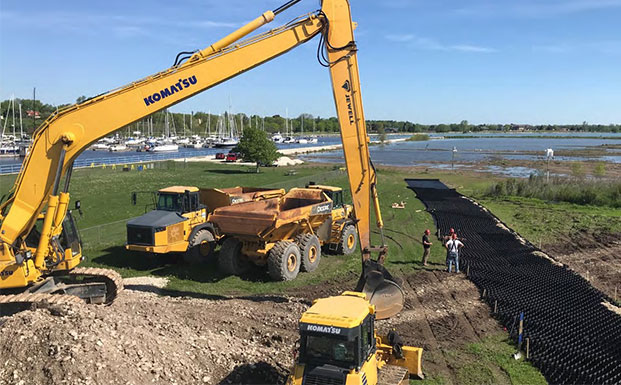
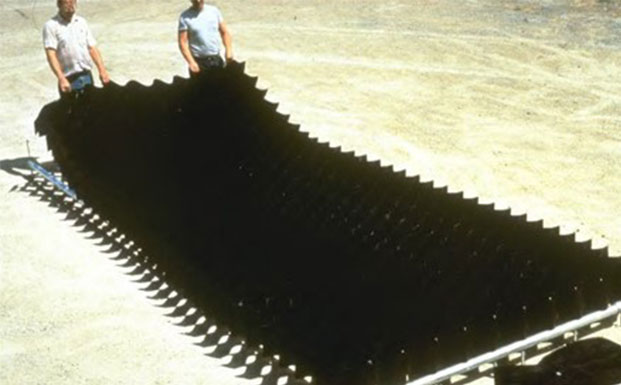
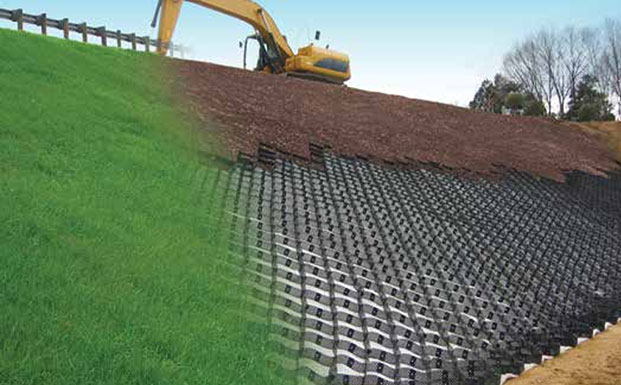
Geocells are three-dimensional honeycomb structures designed to stabilize soils, roads, slopes, embankments, riverbanks, and heavily loaded surfaces. They are used wherever ground conditions need to be improved in terms of load-bearing capacity, erosion resistance, or long-term usability – for example in road construction, port and container terminals, railway and track construction, heavy-duty industrial areas, building foundations, and temporary construction sites.

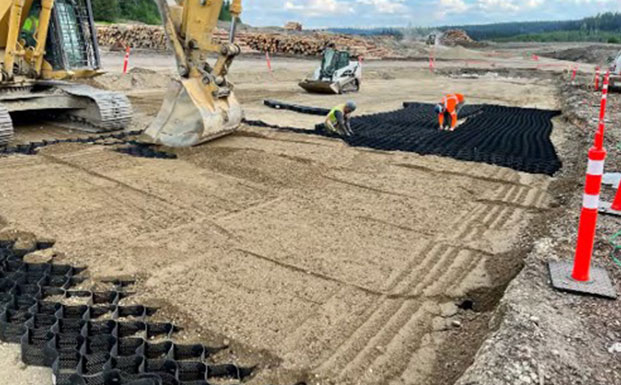
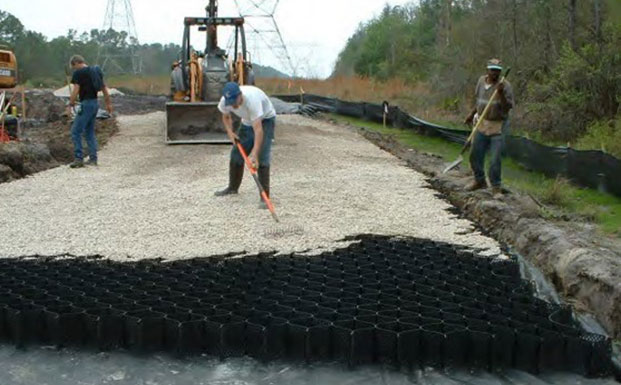
Geocells also play an important role in temporary ground reinforcement applications. They are ideal for construction access roads, temporary site roads, access routes for wind farm and wind turbine projects, and areas that only need to support traffic and loads for a limited period. Depending on project requirements, geocells can be installed beneath paved or unpaved surfaces and filled with soil, gravel, crushed stone, concrete, recycled materials, or other suitable infill materials.

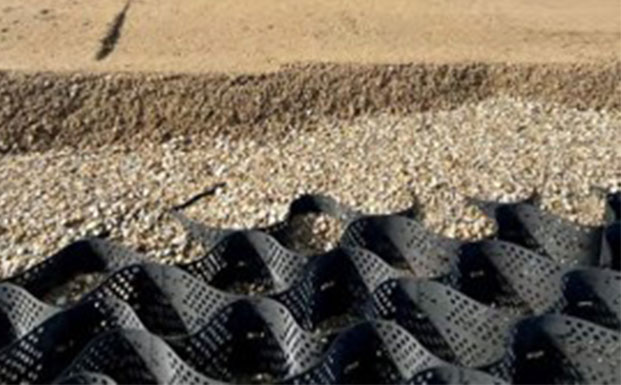
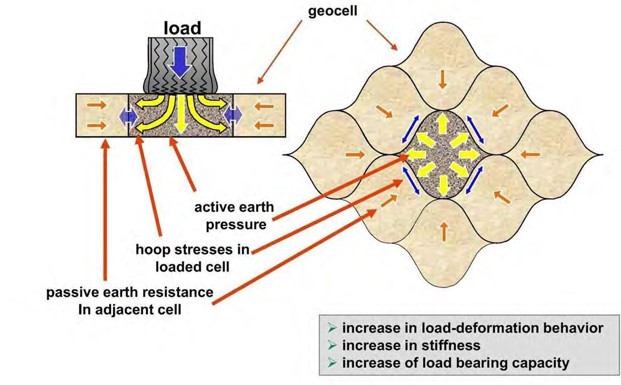
The principle is simple yet highly effective: the cell walls prevent lateral displacement of the infill material under load, while the three-dimensional honeycomb structure distributes applied loads across a larger area. This helps reduce settlement, rutting, erosion, and surface deformation. Particularly on soft, weak, or heavily stressed subgrades, geocells create a stable and reliable load distribution system.

iGG supports you in selecting the most suitable geocell system, cell heights, dimensions, and anchoring solutions tailored to your application, subgrade conditions, load requirements, infill material, and performance objectives.
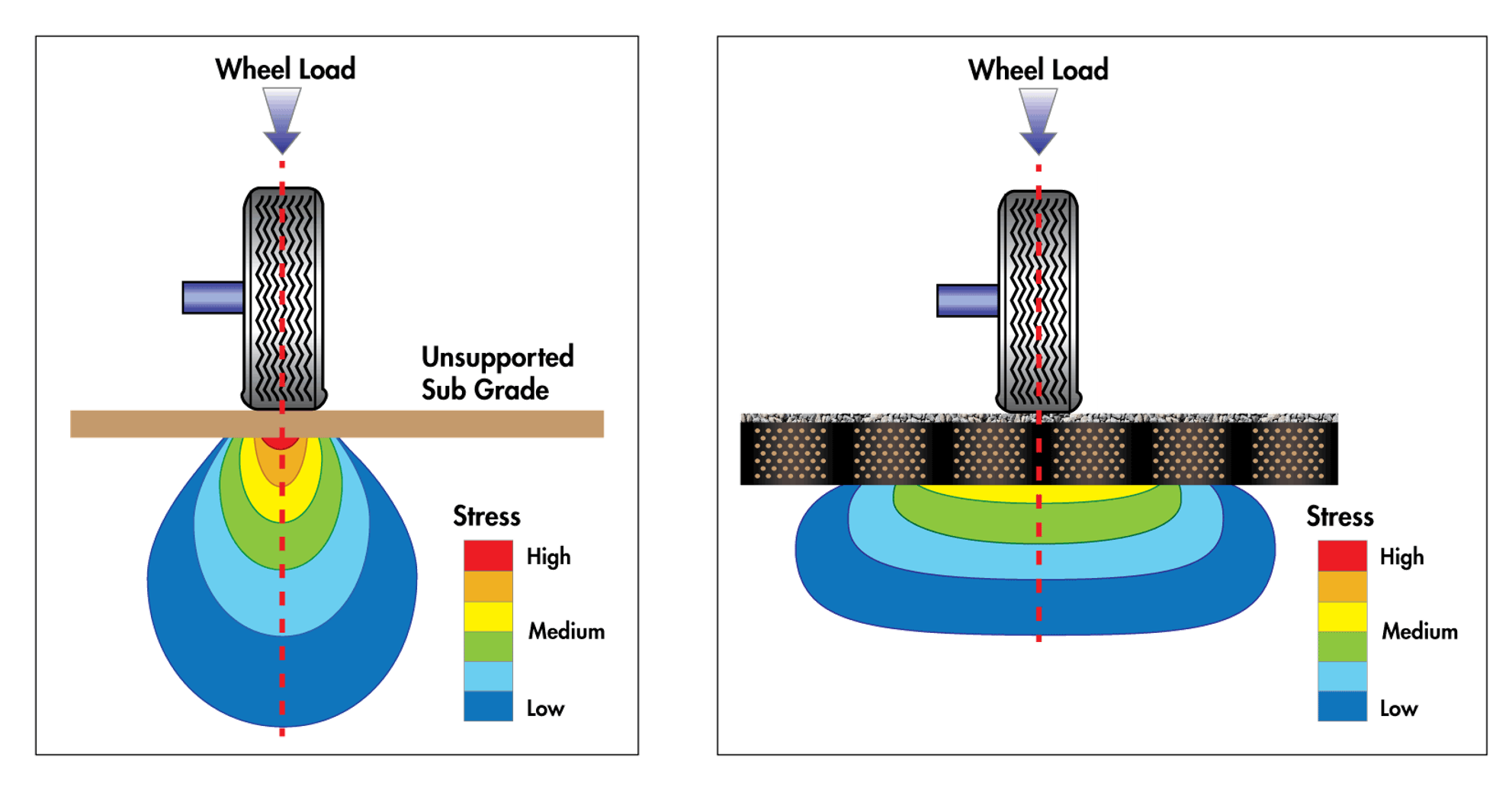
Geocells, Dimensions, and Anchoring as an Integrated System

For a geocell application to perform reliably over the long term, more than just the geocell itself must be considered. Cell height, infill material, subgrade conditions, installation method, and anchoring system all need to be matched to the specific loads and project requirements. A temporary construction road places very different demands on a system than a port facility, slope stabilization project, railway embankment, or permanently loaded industrial area.

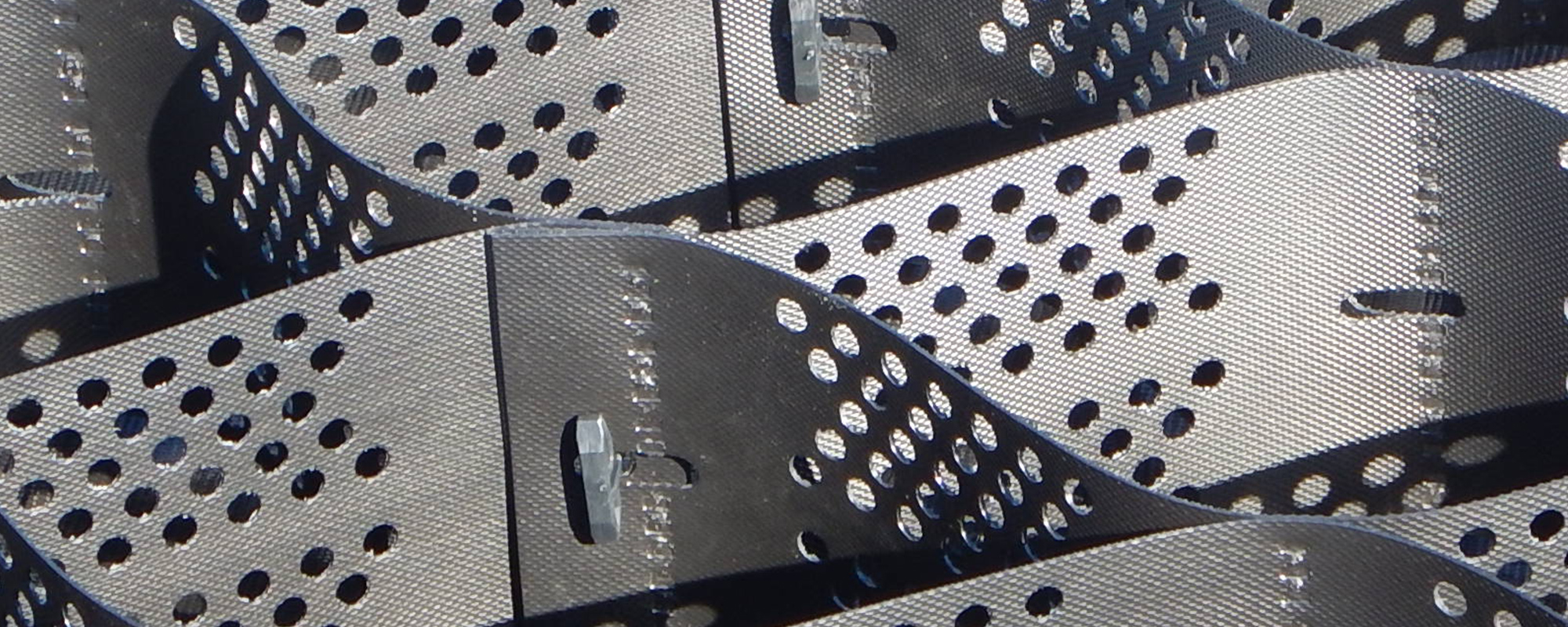
The GEOWEB® system provides the technical foundation for high-performance geocell applications. Structured and perforated HDPE strips are connected to form a durable cellular confinement system that can be combined with a wide range of infill materials. Various cell heights are available to optimize load distribution, stabilization, and erosion control according to project-specific requirements.

Equally important is the appropriate anchoring solution. ATRA® Keys securely connect adjacent geocell panels, while ATRA® Anchors and ground anchors provide reliable fixation within the subgrade. Depending on the application, fastening cables can be used for additional restraint or load transfer. Together, the geocells, infill material, and anchoring components form an integrated system designed for demanding construction and infrastructure projects.

A complete overview of available sizes and dimensions can be found in our technical data sheet.

Fastening & Anchoring Geocells – Accessories for Secure Installation

Connection, anchoring and securing solutions for stable geocell applications

Correct fastening and anchoring are essential to ensure that geocells perform reliably. Depending on the application, geocell panels may need to be connected to one another, anchored into the subgrade or additionally secured against movement, uplift and downslope forces. Especially on embankments, slopes, drainage channels, temporary construction roads, traffic areas and heavily loaded surfaces, the securing method should always be selected to suit the specific installation conditions.

Various solutions are available for GEOWEB® and iGGcells applications. ATRA® Keys securely connect adjoining geocell panels. ATRA® Anchors, or ground anchors, are used to anchor the system into the subgrade. Fastening cords can be used in certain applications for additional securing and load transfer, for example on inclined surfaces or in demanding installation conditions.

ATRA® Keys ATRA® Anchors Fastening Cords
ATRA® Keys are connector elements used to securely link adjoining geocell panels. They are inserted through the I-shaped connection slots of the adjoining geocells and then locked in place with a 90-degree turn. Thanks to their reinforced grip, integrated friction pins and 100 percent mechanical connection efficiency, they create a secure connection that helps resist shear forces, cracking and separation. To connect two geocell panels, 34 ATRA® Keys are required in the longitudinal direction and 8 ATRA® Keys in the transverse direction. ATRA® Anchors, or ground anchors, are used to anchor geocells into the subgrade. They help secure the system against movement or uplift and are particularly relevant for slopes, inclined surfaces, embankments, drainage channels and demanding installation conditions. The anchors create a secure connection between the geocell structure and the subgrade and help transfer forces in a controlled manner. This enables geocells to remain stable and securely positioned even in challenging installation situations. Fastening cords can be used in certain geocell applications to provide additional securing, fixing or load transfer. They can be an important addition to the anchoring system, particularly on inclined surfaces, embankments, channels or in applications where downslope forces are present. In combination with suitable connector elements, fastening cords can help absorb forces from the geocell structure and transfer them in a controlled manner.

Cell Heights & Dimensions – the Right Specification for Different Applications

Which cell height is right for your project?

The ideal cell height depends largely on the intended application. Key factors include the ground conditions, expected loads, infill material, type of surface use, slope angle and the level of stabilisation required. A temporary construction access road, for example, has very different requirements than a permanently used heavy-duty area, slope protection system or access route for wind farm construction.

iGGcells GW30V geocells are available in four cell heights: 7.5 cm, 10 cm, 15 cm and 20 cm. All variants have the same panel size and cell size, but differ in height, weight and the number of units supplied per pallet. This allows the system to be adapted to a wide range of project requirements..

Variant Relative size Cell size Cell area Cells per m² Cell heights
GW20V small cells 224 × 259 mm 289 cm² 34.6 75, 100, 150, 200 mm
GW30V medium-sized cells 287 × 320 mm 460 cm² 21.7 75, 100, 150, 200 mm
GW40V large cells 475 × 508 mm 1.206 cm² 8.3 75, 100, 150, 200 mm

DSC 5832 Steffen Roess 400x400

Hello, I am
Steffen Roess.

I am happy to help:

Tel. +49 4243 9288-18
s.roess@igg.de